
Lawn Mowing & Maintenance
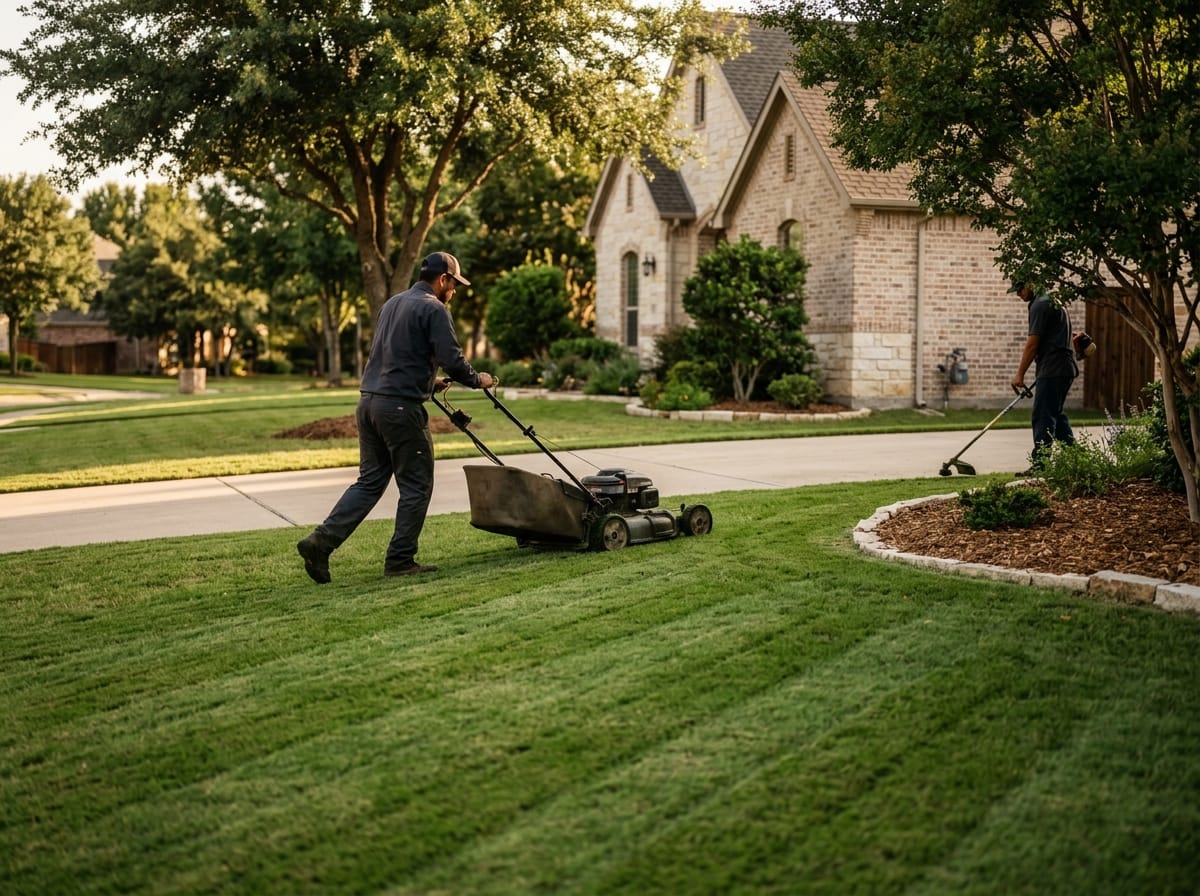
Bermuda and St. Augustine — the two grasses you'll find in most North Texas yards — need different mowing heights, different frequencies, and different handling once summer heat sets in. We calibrate every mow to the grass actually growing in your yard, not a one-height-fits-all pass, so you get clean stripes and a healthy root system instead of a scalped, stressed lawn.
What's Included
- Mowing height calibrated to Bermuda or St. Augustine grass
- Clean string-trimmed edges along beds, walks, and driveways
- Blower cleanup of clippings from hardscape after every visit
- Weekly or bi-weekly recurring schedules, plus one-time mows
- Rain-day rescheduling instead of skipped visits
Typical Pricing
$45–$75 per visit
Typical range for a standard North Texas residential lot on a recurring weekly or bi-weekly plan. Larger lots, steep grades, or heavy growth from a long gap between services may run higher — we always confirm with a walkthrough before locking in a price.
How It Works
- 1
Property walkthrough
We measure the yard, note grass type, slope, obstacles, and any HOA height requirements before the first visit.
- 2
Height & frequency plan
We set a mowing height and cadence matched to your grass type and the season — St. Augustine and Bermuda are not cut the same.
- 3
Weekly or bi-weekly visits
The same crew returns on your set schedule, mowing, edging, and trimming in one pass.
- 4
Cleanup & blow-off
Clippings are cleared from driveways, walkways, and porches so nothing tracks inside.
Common Lawn Mowing Problems We See
Scalping on uneven, clay-compacted lawns
Years of foot traffic and heavy clay soil create low spots and high spots; mowing at a fixed height across an uneven yard can scalp the high points and leave the low points shaggy. We adjust technique, not just deck height, on uneven ground.
Thatch buildup from clippings left in the heat
Clippings that sit too long in North Texas summer heat mat down and block sunlight and airflow to the crown of the grass. We monitor clipping volume and switch to bagging when it's too heavy to mulch safely.
HOA mowing-height violations
Several neighborhoods in our service area enforce specific maximum grass heights. We track HOA requirements per property so you don't get a notice.
Seasonal timing: Mowing frequency ramps up sharply from March through June as lawns green up, holds steady through the hottest stretch of summer (often at a slightly taller cut height to shade the roots), then tapers off through fall before stopping for winter dormancy.
Lawn Mowing & Maintenance By Area
We provide lawn mowing throughout North Central Texas, with dedicated local pages for our top service areas:
Cleburne, TX
Johnson County · ZIP 76031, 76033
Downtown Cleburne, Ridgeview, Chisholm Trail area
View service details →Burleson, TX
Johnson County · ZIP 76028, 76097
Old Town Burleson, Hidden Creek, Mound area
View service details →Joshua, TX
Johnson County · ZIP 76058
Southern Oaks, Rural Shores area
View service details →Mansfield, TX
Tarrant County · ZIP 76063, 76084
Historic Downtown Mansfield, The Reserve, Walnut Creek area
View service details →Fort Worth, TX (Southwest)
Tarrant County · ZIP 76108, 76109, 76115, 76123, 76126, 76132, 76133, 76134, 76140
Wedgwood, Chisholm Trail Ranch, Overton Park area
View service details →Lawn Mowing & Maintenance FAQs
How often should my lawn be mowed in a North Texas summer?
Most Bermuda and St. Augustine lawns in this area need mowing weekly once summer growth kicks in, typically April through September, and can usually stretch to every 10-14 days in cooler months. Mowing too infrequently in peak summer heat means cutting more than a third of the blade at once, which stresses the lawn right when it's already dealing with 100°F+ days. We'll recommend a cadence based on your grass type and how fast it's growing that season.
What height should Bermuda or St. Augustine grass be cut?
Bermuda grass handles a lower cut well, generally 1.5 to 2 inches, which keeps it dense and helps it out-compete weeds. St. Augustine needs to stay taller, usually 3 to 4 inches, because scalping it exposes the stolons to heat stress and invites disease. We identify which grass (or mix) is in your yard before the first mow and set the deck height accordingly, rather than running one blanket height across every property on the route.
Do you bag the clippings or leave them on the lawn?
For most healthy mows, we mulch clippings back into the lawn — it returns nitrogen to clay soil that's often nutrient-poor and reduces how much fertilizer you need. If the lawn has gotten long between visits, or if there's a lot of weed seed head present, we'll bag instead so we're not spreading seed or leaving thick clumps that can smother grass in the heat. We'll always blow clippings off hardscape either way.
What happens if it rains on my scheduled mowing day?
We reschedule rather than skip. Mowing wet grass tears blades instead of cutting them cleanly and can leave ruts in clay soil that stays soggy longer than sandy soil would. If your regular day gets rained out, we'll fit you in within a day or two and keep your regular schedule going forward — you won't lose a visit or fall behind to the point of needing a double-cut.
Related Services
Landscape Maintenance
Ongoing upkeep of flower beds, shrubs, hedges, and overall property landscaping. Keeps your entire property looking cared-for between larger projects like renovations or sod installs.
Learn more →Lawn Fertilization
Seasonal fertilization and weed control programs tuned to North Texas Bermuda and St. Augustine lawns and clay soil. Builds a thicker, greener lawn and keeps weeds from taking over between visits.
Learn more →Mulch Installation
Professional installation of mulch to improve appearance, retain soil moisture, and suppress weeds. A simple upgrade that instantly refreshes flower beds and landscaping.
Learn more →Ready for Lawn Mowing?
Get a straightforward quote for lawn mowing on your property — no runaround.