
Mulch Installation
Mulch does more work in a North Texas summer than almost anywhere else — it's the difference between beds that dry out and crack in 100°F heat and beds that actually hold moisture between waterings. We install at a depth and material that's built for that heat and for the intense UV that fades cheap dyed mulch within a season.
What's Included
- Bed edging and weeding before mulch goes down
- Proper 2-3 inch depth — never mulch volcanos around trunks
- Natural hardwood or dyed mulch options
- Full bed refresh or targeted top-off
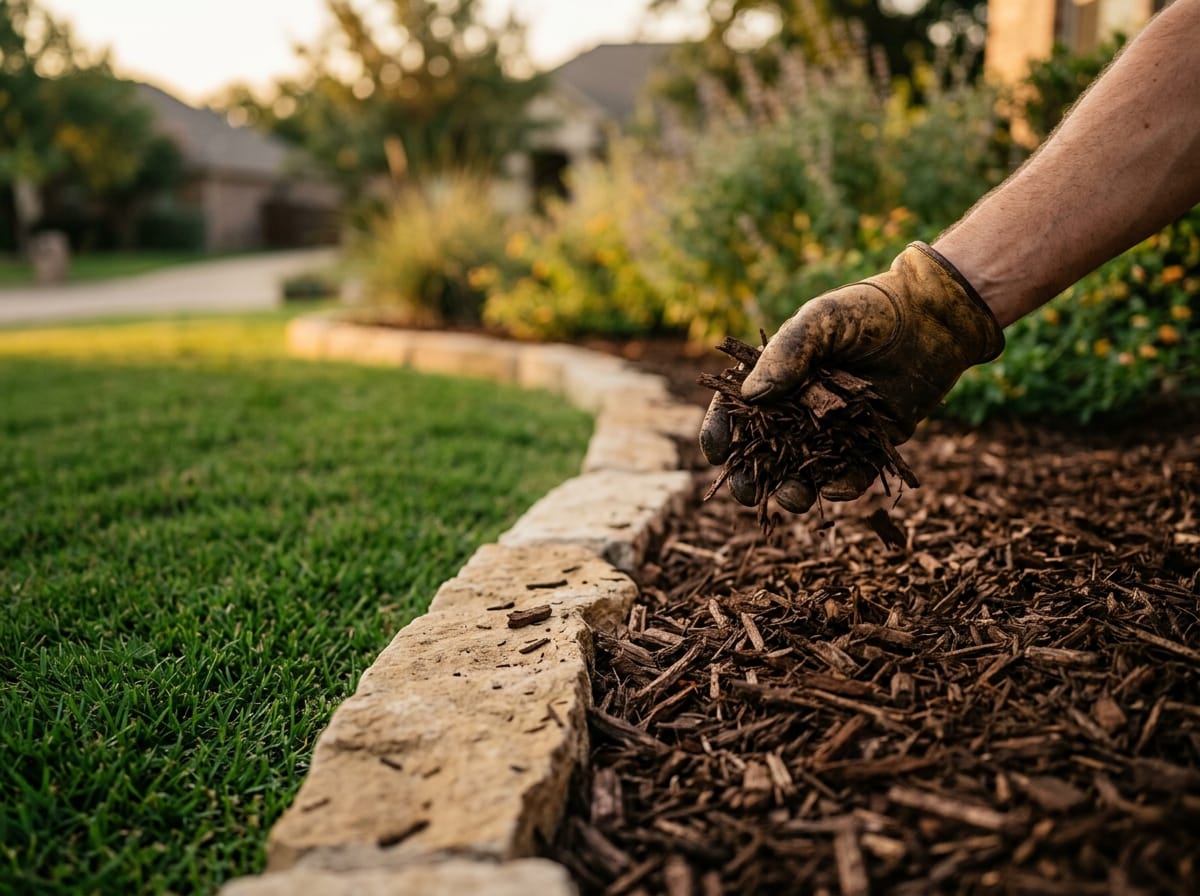
- Clean, defined edge lines between mulch and lawn
Typical Pricing
$85–$150 per cubic yard installed
Installed price includes bed prep, edging, and spreading — bulk mulch material cost varies by type (natural hardwood vs. dyed) and how many cubic yards your beds need, which we calculate during the quote visit.
How It Works
- 1
Bed prep
We clear weeds and debris and re-cut a clean edge before any mulch goes down — skipping this step is why mulch jobs look bad within a month.
- 2
Material selection
We help you choose between natural hardwood, dyed mulch, or other options based on the look you want and how much sun the bed gets.
- 3
Spreading to proper depth
Mulch goes down 2-3 inches deep, pulled back from plant stems and tree trunks to avoid rot and pest issues.
- 4
Edge & finish check
We walk the finished bed line to make sure edges are crisp and mulch is even before we call the job done.
Common Mulch Installation Problems We See
Mulch volcanoes around trees
A very common installation mistake in this region that damages tree health over time. We keep mulch flat and pulled back from trunks.
Fading in intense summer UV
Dyed mulch loses color faster here than in milder climates. We'll set expectations on refresh timing upfront so there are no surprises.
Washing out on sloped beds in heavy rain
North Texas gets intense, fast rainfall at times — mulch on a slope without proper edging can wash into the lawn or street. We edge and, where needed, use larger mulch material on slopes to keep it in place.
Seasonal timing: Spring is the highest-demand season for mulch installs, timed around flower bed refreshes and before summer heat arrives; a smaller fall round helps insulate beds and roots heading into winter.
Mulch Installation By Area
We provide mulch installation throughout North Central Texas, with dedicated local pages for our top service areas:
Cleburne, TX
Johnson County · ZIP 76031, 76033
Downtown Cleburne, Ridgeview, Chisholm Trail area
View service details →Burleson, TX
Johnson County · ZIP 76028, 76097
Old Town Burleson, Hidden Creek, Mound area
View service details →Joshua, TX
Johnson County · ZIP 76058
Southern Oaks, Rural Shores area
View service details →Mansfield, TX
Tarrant County · ZIP 76063, 76084
Historic Downtown Mansfield, The Reserve, Walnut Creek area
View service details →Fort Worth, TX (Southwest)
Tarrant County · ZIP 76108, 76109, 76115, 76123, 76126, 76132, 76133, 76134, 76140
Wedgwood, Chisholm Trail Ranch, Overton Park area
View service details →Mulch Installation FAQs
What is the best mulch type for North Texas heat?
Shredded hardwood mulch is a strong all-around choice here — it knits together to resist washing out in a heavy summer downpour and breaks down slowly enough to still be doing its job by the time a refresh is due. Dyed mulch looks great when it's fresh, but intense Texas UV fades color faster than in milder climates, so if you want dyed mulch to stay vibrant, plan on a lighter annual refresh rather than stretching it to two years.
How often does mulch need to be refreshed?
Most North Texas beds need a full refresh once a year, typically in spring, with a lighter top-off in fall if the beds are looking thin going into winter. Beds in full sun break down and fade faster than shaded beds because of the heat and UV exposure, so a sunny front bed may need attention more often than a shaded north-facing bed.
Why shouldn't mulch be piled up against tree trunks?
Piling mulch high against a trunk — often called a mulch volcano — traps moisture against the bark, which invites rot, fungus, and insects, and can eventually girdle the tree's roots. We always pull mulch back a few inches from trunks and stems, keeping the depth flat around the base rather than mounded, even though the piled look is unfortunately common in this area from lower-effort installs.
Do you remove old mulch before installing new mulch?
For a full refresh, we clear out old, compacted mulch and debris rather than just piling new mulch on top, since old mulch that's broken down into a dense mat can actually block water from reaching the soil. For a simple top-off on beds that were mulched within the last year and still look mostly good, we can add fresh mulch over the existing layer instead.
Related Services
Lawn Mowing & Maintenance
Regular mowing, edging, and trimming to keep lawns clean, healthy, and well-maintained — scheduled on a route you can count on, with the same crew coming back visit after visit.
Learn more →Landscape Maintenance
Ongoing upkeep of flower beds, shrubs, hedges, and overall property landscaping. Keeps your entire property looking cared-for between larger projects like renovations or sod installs.
Learn more →Lawn Fertilization
Seasonal fertilization and weed control programs tuned to North Texas Bermuda and St. Augustine lawns and clay soil. Builds a thicker, greener lawn and keeps weeds from taking over between visits.
Learn more →Ready for Mulch Installation?
Get a straightforward quote for mulch installation on your property — no runaround.