
Sod Installation
Laying sod directly onto unamended North Texas clay is the single biggest reason new sod fails to take root properly. Clay compacts hard, drains poorly, and doesn't give new roots much to grab onto without help. We prep the soil first — grading, amending, and loosening — so the sod you're paying for actually establishes instead of struggling through its first summer.
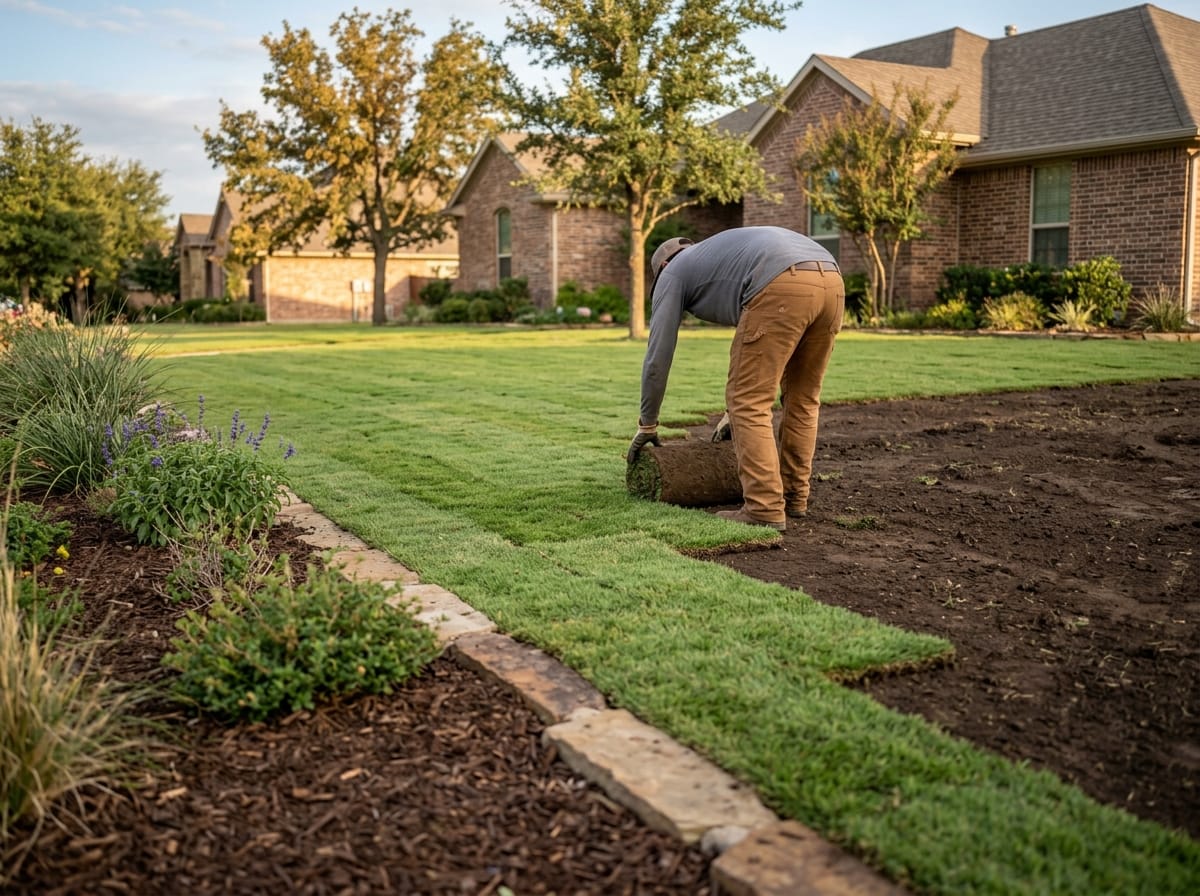
What's Included
- Site grading and clay soil amendment before installation
- Bermuda or St. Augustine sod matched to your sun exposure
- Full new-lawn installs or targeted patch repair
- Initial watering schedule and establishment guidance
- Proper seam and edge work for a seamless-looking lawn
Typical Pricing
$0.85–$1.75 per sq ft installed
Price depends on sod type (Bermuda vs. St. Augustine), how much soil prep and grading the site needs, and total square footage. Small patch repairs are quoted differently than full-yard installs.
How It Works
- 1
Site prep & grading
We grade the area for proper drainage and remove old dead grass or debris before amending the soil.
- 2
Soil amendment
Clay soil gets loosened and amended so new sod roots can actually penetrate it, instead of sitting on top of compacted ground.
- 3
Sod laying
Sod is laid in staggered rows with tight seams — gaps and misaligned edges are where sod typically fails first.
- 4
Establishment watering plan
We walk you through the watering schedule for the critical first 2-3 weeks, which matters more than almost anything else for how well the sod takes.
Common Sod Installation Problems We See
Sod laid on unamended clay
The single biggest cause of sod failure we see in this region. We always prep and amend the soil before laying sod, even when it adds a step customers weren't expecting.
Wrong grass type for sun/shade conditions
Bermuda struggles in shade; St. Augustine struggles with heavy foot traffic and full baking sun. We match grass type to how the space is actually used and lit.
Underwatering in the first 2-3 weeks
New sod has almost no root depth yet and dries out fast in North Texas heat. We give a specific watering schedule, not just a general "keep it watered" instruction.
Seasonal timing: Late spring through early summer is the strongest install window for root establishment before peak heat; a secondary fall window works well too, while mid-summer and pre-freeze installs both carry higher establishment risk.
Sod Installation By Area
We provide sod installation throughout North Central Texas, with dedicated local pages for our top service areas:
Cleburne, TX
Johnson County · ZIP 76031, 76033
Downtown Cleburne, Ridgeview, Chisholm Trail area
View service details →Burleson, TX
Johnson County · ZIP 76028, 76097
Old Town Burleson, Hidden Creek, Mound area
View service details →Joshua, TX
Johnson County · ZIP 76058
Southern Oaks, Rural Shores area
View service details →Mansfield, TX
Tarrant County · ZIP 76063, 76084
Historic Downtown Mansfield, The Reserve, Walnut Creek area
View service details →Fort Worth, TX (Southwest)
Tarrant County · ZIP 76108, 76109, 76115, 76123, 76126, 76132, 76133, 76134, 76140
Wedgwood, Chisholm Trail Ranch, Overton Park area
View service details →Sod Installation FAQs
Should I choose Bermuda or St. Augustine sod for my yard?
It comes down to sun exposure mostly. Bermuda needs full sun (6+ hours a day) and handles heat, drought, and foot traffic better than St. Augustine, making it a strong choice for open front yards and sports-lawn-style backyards. St. Augustine tolerates more shade and is often preferred for its look, but it needs more water and doesn't hold up to heavy foot traffic as well. If your yard has a real mix of sun and shade, we'll talk through the tradeoffs for each area rather than picking one grass for the whole property.
What is the best season to install sod in North Texas?
Late spring through early summer is the ideal window — the soil is warm enough for both Bermuda and St. Augustine to root quickly, but the harshest heat hasn't fully arrived yet. Fall installation can work too, giving roots a chance to establish before winter dormancy, but installing in the dead heat of July or August or right before a hard freeze both make establishment noticeably harder.
How soon can I walk on or mow new sod?
Plan on keeping foot traffic off new sod for at least 2-3 weeks while roots establish, and hold off mowing until it's rooted enough that it doesn't shift when tugged gently — usually around that same 2-3 week mark, though it can run longer in hot, dry stretches. Watering correctly during that window matters more than the exact day count, so we give you a schedule to follow rather than just a calendar date.
Why did my sod fail to take root after a previous install?
The most common reason we see is sod laid straight onto compacted clay without any soil prep — the roots simply can't penetrate hard-packed ground, so the sod sits on top, dries out, and dies even with regular watering. Underwatering during the first few weeks and installing during peak summer heat are the other two most common causes. We address all three by amending the soil first and giving you a clear watering plan.
Related Services
Lawn Mowing & Maintenance
Regular mowing, edging, and trimming to keep lawns clean, healthy, and well-maintained — scheduled on a route you can count on, with the same crew coming back visit after visit.
Learn more →Landscape Maintenance
Ongoing upkeep of flower beds, shrubs, hedges, and overall property landscaping. Keeps your entire property looking cared-for between larger projects like renovations or sod installs.
Learn more →Lawn Fertilization
Seasonal fertilization and weed control programs tuned to North Texas Bermuda and St. Augustine lawns and clay soil. Builds a thicker, greener lawn and keeps weeds from taking over between visits.
Learn more →Ready for Sod Installation?
Get a straightforward quote for sod installation on your property — no runaround.